
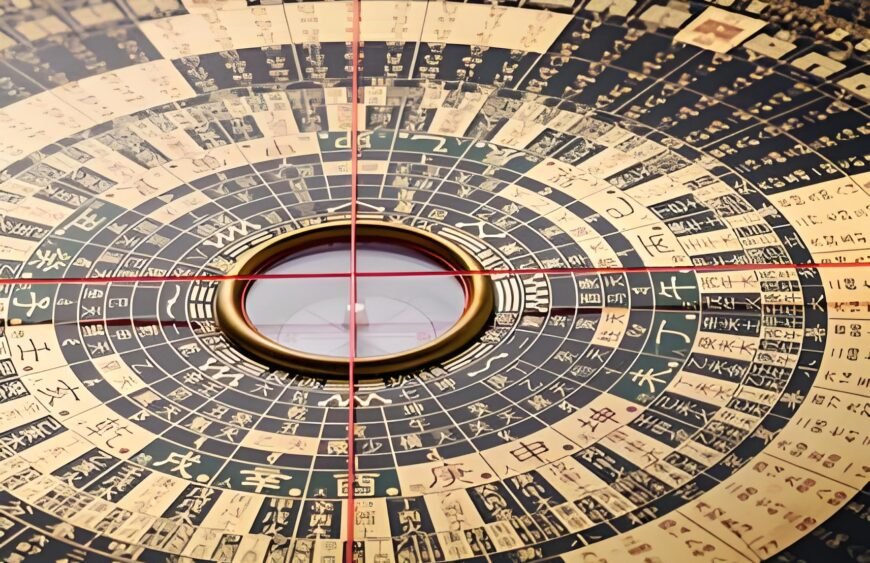
What Is Feng Shui? – The Art of Living in Harmony with Nature
You may have heard people talk about “good Feng Shui” for a house, or “bad Feng Shui” for a desk facing a wall. But what does it actually mean? Is it superstition? Interior design? Or something deeper?
Feng Shui (pronounced fung shway) literally means “wind – water.” In traditional Chinese culture, wind and water are the two most basic carriers of Qi (energy). Where they flow gently and smoothly, life thrives. Where they stagnate or rush violently, trouble follows.
Feng Shui is the ancient art of arranging your environment – your home, office, bedroom, even your garden – so that the invisible energy around you supports your health, relationships, and peace of mind.
Where Does Feng Shui Come From?
Feng Shui grew out of Daoist observation of nature. Thousands of years ago, Chinese farmers and hermits noticed that certain places felt better than others: a hillside sheltered from harsh winds, a house facing a slow river, a bed positioned away from a draft.
They realised that the land itself has energy veins, just like the human body has meridians. By aligning buildings and tombs with the natural landscape – mountains, water, sun, wind – people could live longer, sleep better, and even avoid misfortune.
The oldest Feng Shui tools (the Luopan compass and the Bagua) come directly from Daoist cosmology: Yin & Yang, the Five Elements, and the Eight Trigrams.
The Two Core Ideas of Feng Shui
1. Qi (气) – The Breath of Life
Qi is the invisible energy that flows through everything: the air you breathe, the soil under your feet, the walls around you. In Feng Shui, we want Qi to move neither too fast nor too slow.
- Too fast (e.g., a long straight hallway rushing to the front door) → Qi becomes aggressive, like a gust of wind that knocks things over.
- Too slow (e.g., a cluttered, dark corner with no windows) → Qi becomes stagnant, like a pond with no outlet – moldy, heavy, depressing.
Good Feng Shui means creating a balanced flow: gentle, winding, and alive.
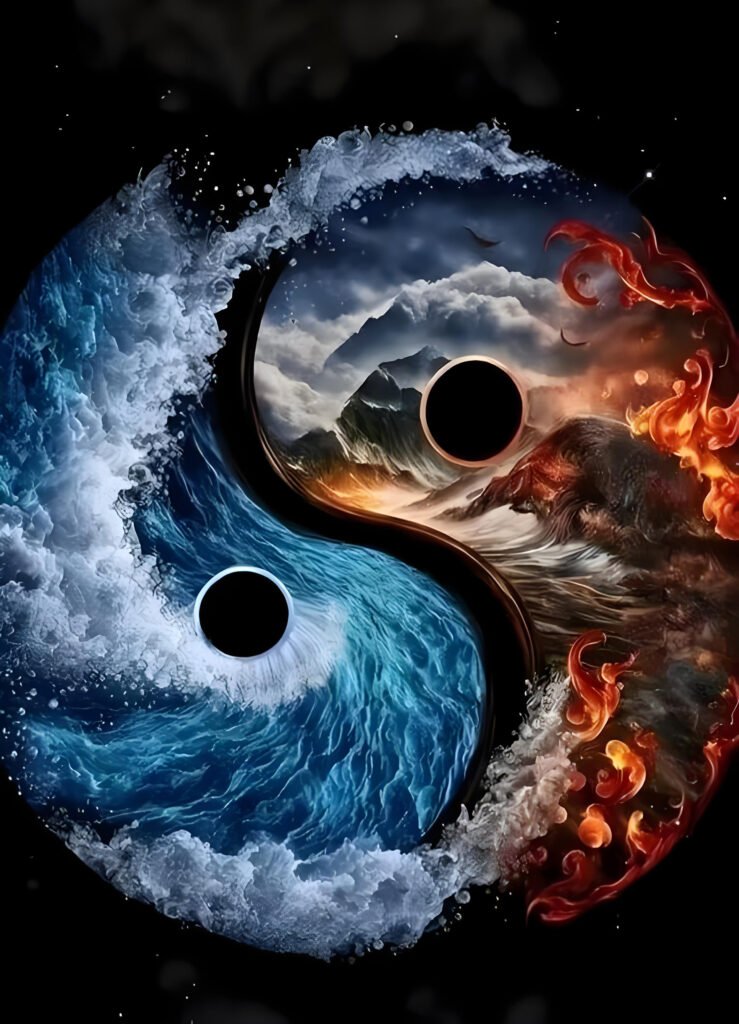
2. Yin & Yang – The Dance of Opposites
Every space has a mix of Yin (soft, dark, quiet, cool) and Yang (bright, loud, active, warm). A healthy room balances both.
- A bedroom needs more Yin (calm, restful) – but too much Yin feels like a cave.
- A kitchen or office needs more Yang (energy, movement) – but too much Yang feels like a battlefield.
Feng Shui helps you tune this balance using colors, shapes, lighting, and furniture placement.
The Practical Tools: Bagua & Five Elements
The Bagua (八卦) is an octagonal map that divides any space into nine areas (Health, Wealth, Relationships, Family, etc.). By overlaying the Bagua onto your floor plan, you can see which part of your home affects which part of your life.
The Five Elements (Wood, Fire, Earth, Metal, Water) are the “ingredients” of Qi. Each element has a color, shape, and season. Wood brings growth; Fire brings passion; Earth brings stability; Metal brings clarity; Water brings flow. Feng Shui uses these elements to fix imbalances – for example, adding a wooden plant to a corner that feels too “fiery.”
Common Feng Shui Tips You Can Try Today
You don’t need to become a master overnight. Here are three simple adjustments:
- Keep your front door clear and welcoming. The main door is the “mouth of Qi.” If it’s blocked by shoes, trash, or a dark hallway, good energy cannot enter.
- Never sleep with your feet pointing directly at the bedroom door. That position is called the “coffin position” – ancient Chinese believed it allows Qi to rush straight at you while you sleep. Move your bed to a corner where you can see the door but are not aligned with it.
- Add a small water feature or a mirror to expand a small room. Water (real or symbolic) invites flow. A well-placed mirror can “double” space and light, improving Qi circulation.
Is Feng Shui a Religion? Magic?
No. Feng Shui is a practical environmental science rooted in Daoist naturalism. It does not require you to worship gods or believe in ghosts. You can be an atheist and still benefit from Feng Shui – just as you can enjoy fresh air without believing in “air spirits.”
That said, many people combine Feng Shui with Fulu talismans (Daoist paper charms), Bagua mirrors, or crystal spheres to strengthen the energy of a specific area. At Nature & Tao, our Feng Shui bracelets and pendants are designed to carry the same balancing intention – so you can take a little bit of good Qi with you wherever you go.
Final Thought: You Are Where You Live
Feng Shui reminds us of a simple truth: your environment shapes your mind. A messy, dark, cramped room makes you tired and irritable without you knowing why. A clean, bright, balanced room makes you feel lighter, clearer, and more hopeful.
You don’t need a perfect mansion. You just need to start paying attention – to the wind, to the water, to the way you position your bed, your desk, your heart.
That is Feng Shui.
Ready to invite better Qi into your life?
Explore our Feng Shui collection – from Bagua pendants to natural crystal bracelets and hand-drawn Fulu talismans.
👉 [Shop Feng Shui at NatureAndTao.com]
