What Is Dao? (The Way) – The Heart of Taoism
If you have ever come across the yin‑yang symbol, watched a Tai Chi practice, or heard the famous saying “a journey of a thousand miles begins with a single step” — you have already touched the edge of Dao (also spelled Tao).
But what exactly is Dao?
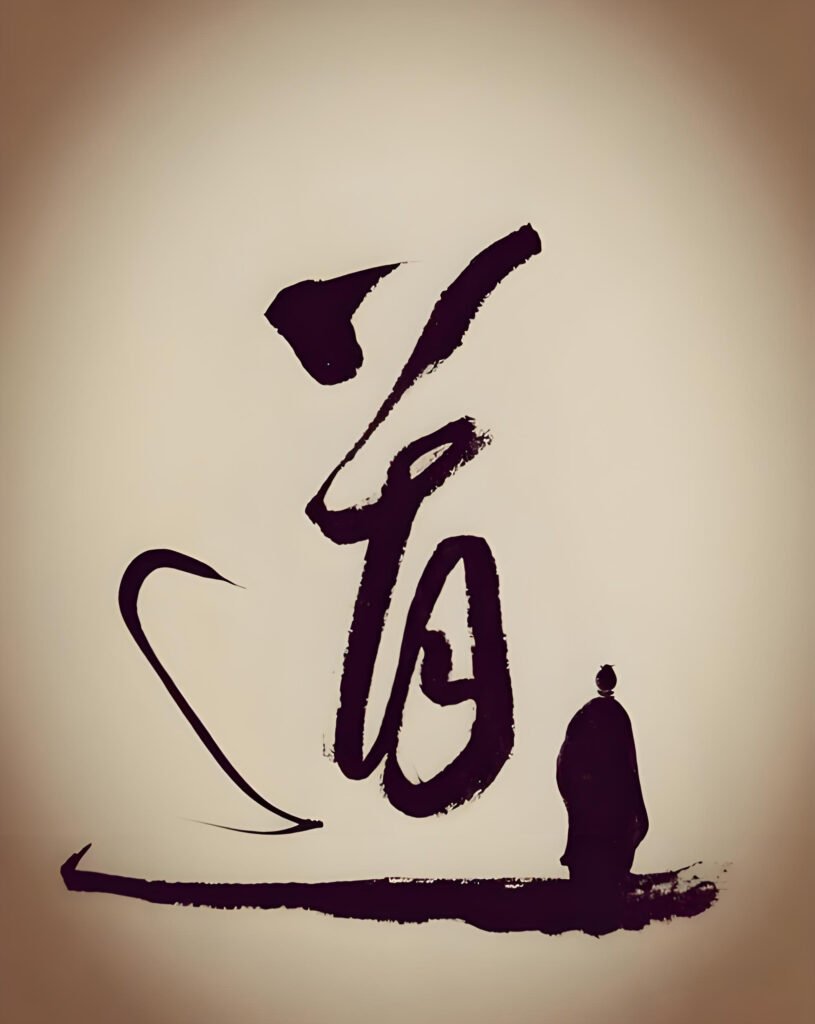
Dao Is Not a “Thing” — It Is the Way
In simple words, Dao means “the Way.” But it is not a path you can point to on a map. It is the natural, underlying order of the entire universe — the invisible flow that makes spring follow winter, rivers run downward, and seeds grow into trees.
The ancient Chinese sage Laozi, who wrote the classic Dao De Jing (Tao Te Ching), begins the book with a warning:
“The Dao that can be told is not the eternal Dao.”
In other words, the moment you try to put Dao into a box, give it a fixed definition, or capture it with words — you have already missed it. Dao is too vast, too fluid, and too deep for language. It must be experienced and felt, not just explained.
Two Ways to Understand Dao
To help Western minds approach Dao, Taoists often distinguish two sides of the same coin:
- The Unnamed Dao (Wúmíng Dào) – The mysterious, formless source of everything. It cannot be seen, heard, touched, or named. It simply is.
- The Named Dao (Yǒumíng Dào) – The Dao that shows itself in nature, in the seasons, in your breath, in the rhythm of day and night. This is the Dao you can follow in daily life.
Think of it like the wind. You cannot see the wind itself — but you see the trees sway, feel the breeze on your skin, and watch clouds move across the sky. The effects are visible, but the wind itself is invisible. Dao is similar: invisible as a thing, yet fully present in every change around you.
The Three Great Teachings of Dao
- Naturalness (Zìrán)
Dao does not force anything. Water does not struggle to be wet; fire does not try to be hot. Everything follows its own nature without strain. A wise person who lives by Dao acts naturally — without pretending, without fighting against reality. - Non‑Action (Wúwéi)
Many people translate wúwéi as “doing nothing.” That is wrong. Wúwéi means effortless action — like a skilled surfer riding a wave. The surfer does not fight the ocean; he flows with it. Wúwéi is not laziness; it is taking action at the right moment, in the right way, without forcing or resisting. - Softness Overcomes Hardness
Laozi taught: “Water is the softest thing, yet it can wear away mountains.” A newborn baby is soft and flexible — full of life. A dead body is stiff and brittle. Following Dao means staying flexible, humble, and gentle, because that is what lasts.
How Does Dao Relate to Your Daily Life?
Even if you never sit in a Taoist temple or burn incense, you already live with Dao. Every time you:
- Pause before reacting in anger → you follow Dao’s rhythm
- Let go of control and trust the process → you practice wúwéi
- Walk in nature and feel peaceful without reason → you feel Dao’s presence
At Nature & Tao, we create talismans (Fulu), bracelets, pendants, and home decor not as “magic objects” — but as reminders of the Dao. A jade pendant shaped like the Bagua, a hand‑drawn Fulu talisman, a wooden carving of Tai Chi — these are tiny anchors that help you return to the Way whenever life pulls you into hurry, greed, or fear.
Final Thought: You Cannot Lose Dao
You do not need to “find” Dao. You cannot lose it either. Dao is always there, like gravity or like your own heartbeat. The only question is whether you live in harmony with it — or against it.
When you live in harmony with Dao, decisions become easier, stress slowly fades, and you begin to notice small miracles: the perfect timing of a bus, a kind word from a stranger, a sunny day after a storm.
That is Dao at work.
Would you like to explore more?
Check out our Taoist talismans (Fulu) and Bagua pendants — each piece is crafted with traditional symbols meant to align your personal energy with the flow of Dao.
👉 [Browse Taoist Collection at NatureAndTao.com]
